
How to Build a Press Kit That Actually Works: and Why So Many Get Shot AT UNIT 13
For artists, musicians, designers, and creative studios, a press kit is often the first real introduction someone has to your work — before a gallery, a journalist, a curator, or a potential collaborator ever meets you in person. A strong press kit can open doors; a weak one gets skipped past. Here's what actually goes into a good one, and why the studio session behind it matters more than people usually think.
What a Press Kit Is Actually For
A press kit isn't a portfolio, and it isn't a CV. It's a compact, ready-to-use package that lets someone else — a journalist, programmer, gallery, or brand — quickly understand who you are, what you do, and how to present that to their own audience. The goal is to make it as easy as possible for someone else to talk about your work accurately and well.
The Core Elements of a Strong Press Kit
A short, clear bio — usually two versions: a one-line intro and a longer paragraph. Written in third person, focused on what you do and why it matters, not a full career history.
A professional portrait or headshot — high-resolution, well-lit, and usable across different formats (print, web, social). This is the image that ends up next to your name in articles, programs, and listings.
Work samples — a tight, curated selection rather than an exhaustive archive. Quality and relevance beat quantity.
An artist or brand statement — short, specific, and free of jargon. What are you actually trying to do with the work?
Contact and logistics — direct contact info, website, socials, and where relevant, technical specs (dimensions, formats, availability).
Press coverage or quotes, if available — even a small amount of prior coverage adds credibility.
Why the Photography Part Deserves More Attention
Most press kits fall short at exactly the point where they should be strongest: the portrait. A phone photo, an old headshot, or an inconsistent image across platforms undermines everything else in the kit — no matter how well the bio is written.
This is also the part of the process most artists underestimate in terms of prep. A good portrait session for a press kit needs:
Controlled lighting — daylight or ambient light is unpredictable and inconsistent across a career's worth of use
A neutral or flexible backdrop — so the image works across different contexts (a gallery listing, a magazine feature, a festival program)
A few different looks in one session — a straightforward portrait, a more candid or in-context shot, and often a close detail or process shot (hands, materials, workspace)
Enough time to actually relax in front of the camera — most usable portraits don't happen in the first five minutes
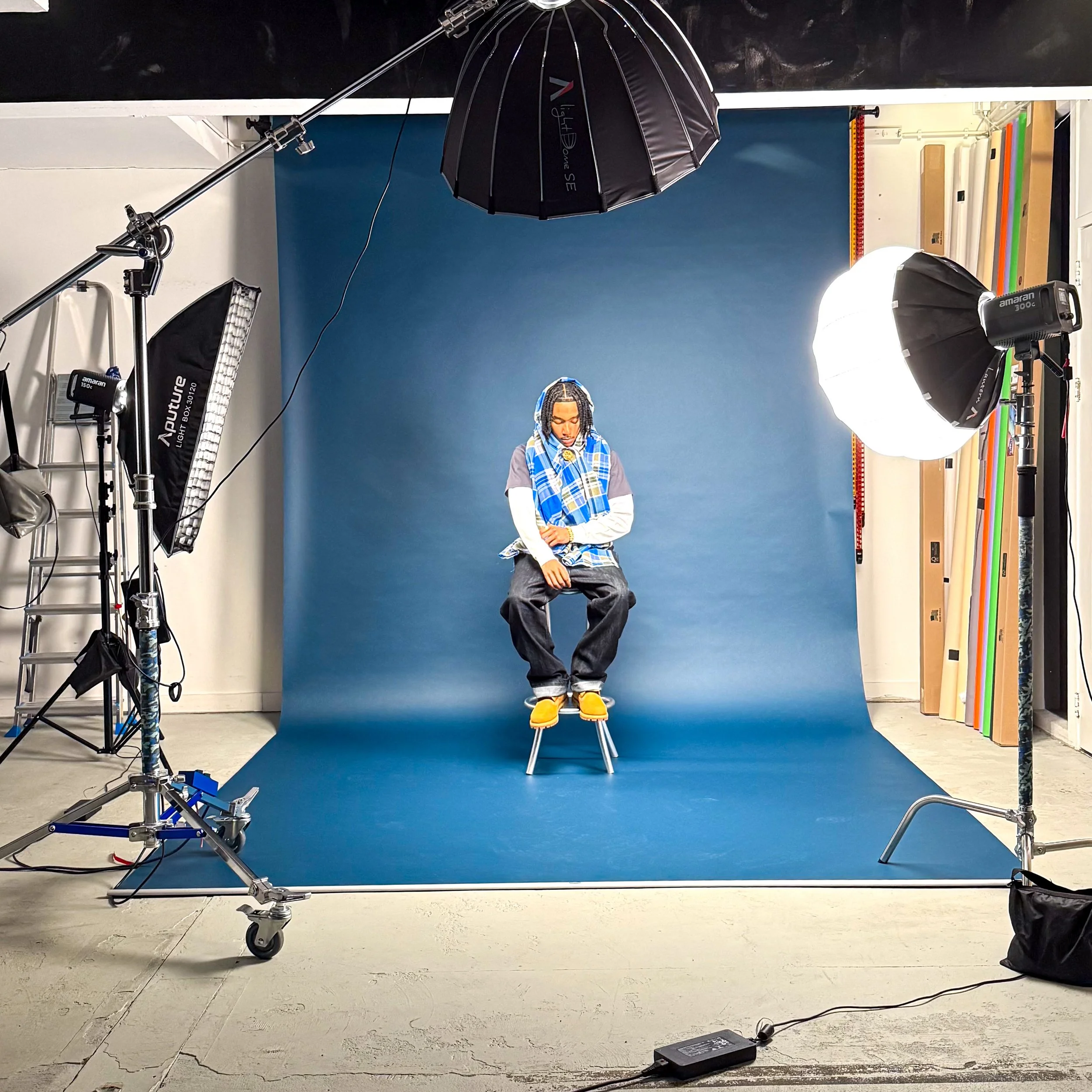
This is exactly why studio sessions for press kits happen so often at Unit 13: the space, lighting setup, and creative environment are already built for this kind of shoot, and residents or visiting artists can move from working on their practice directly into producing usable, professional images without having to source or set up a separate studio elsewhere.
A Few Practical Tips Before a Press Kit Shoot
Bring 2–3 outfit or styling options, even for a simple headshot — small changes in lighting or background can shift what works
Decide in advance whether you need horizontal or vertical crops, since press kits often get used in both
Photograph a few pieces of work in the same session if possible — consistent lighting and color across your portrait and work images makes the whole kit feel cohesive
Export in multiple formats and resolutions from the start (print-ready and web-ready), rather than resizing a single file later
Press Kit Packages: What to Expect to Pay
Press kit pricing varies a lot depending on scope — a simple headshot update is a different job from a full EPK with portrait, work photography, and video. Based on comparable studios and photographer packages in the Netherlands and abroad, here's a rough sense of what different levels of service typically cost. With 5+ years of experience in photography and press kits, an in-house photography team, and a network of partner photographers and videographers for additional services, Unit 13 can scope a package at any of these levels.
Essential Portrait Session — from ~€175–225 A focused 60 minute session for an updated press or profile portrait. One backdrop or setup, a couple of looks, and a small set of retouched, print- and web-ready images. Good for a straightforward refresh rather than a full kit.
Full Press Kit Session — from ~€350–450 A 2–3 hour session combining a portrait with work photography — documenting pieces, materials, or process shots that give the kit visual range beyond a single headshot. Includes a larger set of edited images in multiple crops and formats.
Complete EPK (Electronic Press Kit) Package — from ~€650–850 A half-day session that combines photography with a short interview-style video component, produced with one of Unit 13's partner videographers. Suited to artists or musicians who want a press kit that includes both stills and a short video piece for pitching press, festivals, or bookers.
Add-ons (available across any package):
Extra editing hours or additional retouched images
Additional looks, outfits, or setups within the same session
Extended video or interview production with a partner videographer
Studio time booked separately from the shoot, for prep or styling
These figures are a general starting reference based on comparable studio and photographer pricing — actual quotes depend on scope, timing, and what's already in place (existing bio, work selection, etc.). For an exact quote, get in touch directly.
Where This Fits at Unit 13
Because Unit 13 already operates as a working photo and creative studio, press kit sessions are a natural fit alongside residencies, personal projects, and collaborative shoots. Artists working from the space — whether short-term visitors or residents — often use studio time to produce the portrait and work photography their press kit needs, without adding an extra step to their process.
Questions about studio availability for a shoot can be sent to info@unit-13.com. Updates on the studio and residency program are shared via Instagram @unit13.studio and the Unit 13 newsletter.
